Sixteen ways to share an afternoon, from a quiet board to a friendly outdoor match.
Our proposed retreat collection brings together games associated with different places and traditions. Each card explains a chosen version, the equipment, a complete beginner sequence and how the game ends. Local variants may differ; these are proposals, not facilities already installed or a list of every game in the world.
Rule-source review: 15 October 2026. Proposed teaching versions; see each card for variations and source-access limitations.
Keep complete sets in labelled boxes with the illustrated rules. Offer a practice turn before starting. Use contrasting pieces, a reachable table and seats suited to the actual guests.
A clear outdoor lane
Mark throwing and waiting areas away from paths, animals and other games. Everyone waits behind the active player; retrieve pieces only when throwing has stopped. Adapt the layout to the site and chosen equipment.
A shared game night
Let guests choose an activity and pace. Agree the variant and scoring before play, demonstrate one round, then rotate partners if people want. Record actual play for an episode only with appropriate participant consent.
Build storage, signs and a score board from assessed recovered timber. Use accurate purpose-suitable playing pieces; an uneven ball, sharp offcut or improvised heavy throwing object is not a good reuse project. No purchases or installation are included here.
The proposed collection
Learn the game, then play a round.
16 games
No games match. Try another word or show all games.
01 / Outdoor
Kubb
Associated with Sweden and Gotland; no Viking-origin claim.
2 teams; retreat groups of 1–6 per side · Open the illustrated rules
The version we teach. Retreat six-baton introduction, not the US tournament 2–4–6 opening or minimum-three-player roster.
Equipment
10 kubbs, 6 throwing batons, 1 king
Boundary markers
Set it up
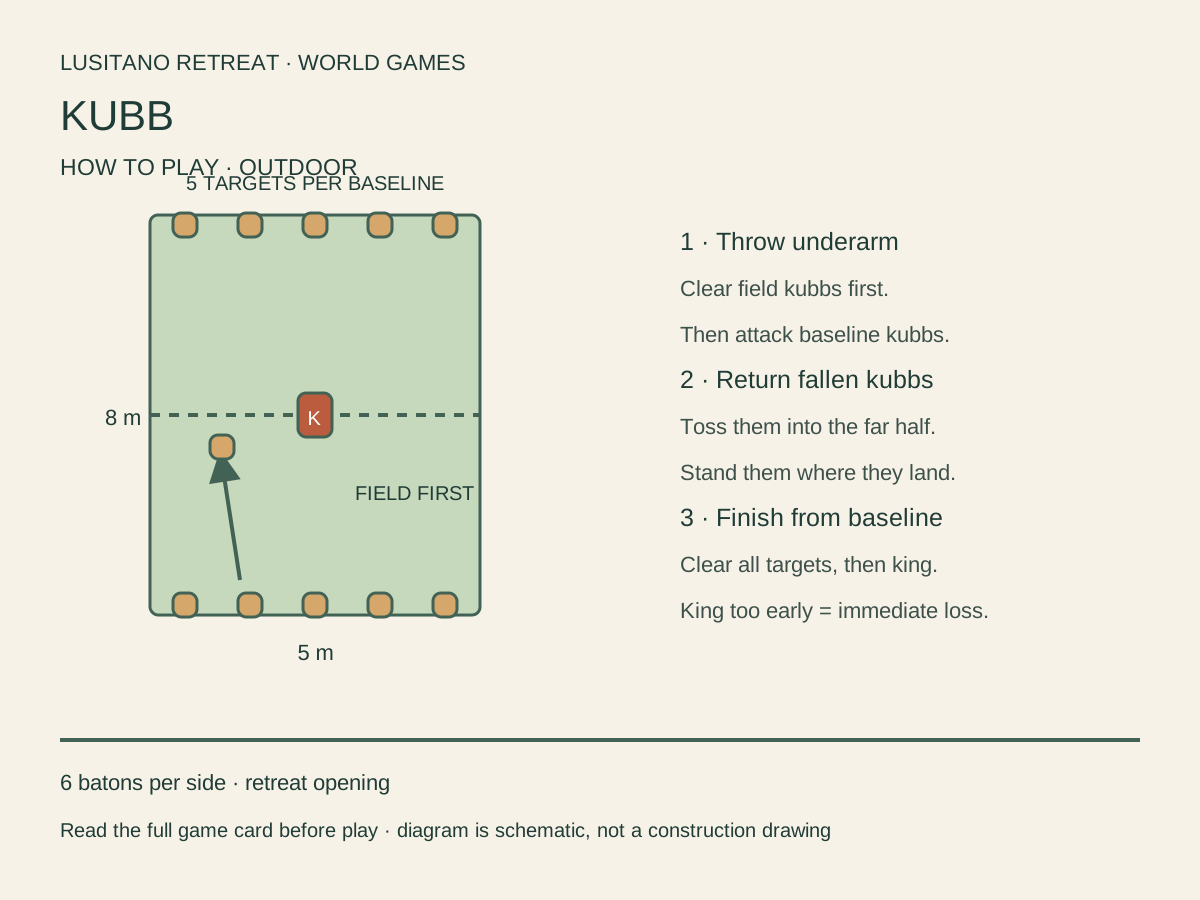
Mark 5 × 8 m. Put five kubbs on each baseline and the king centrally.
Coin-toss the opening side. Our introduction gives each side six batons per turn.
How to play
Throw batons underarm, end-over-end, behind the line; no helicopter throws.
Re-throw toppled kubbs into the opposing half; opponents stand them where they land. Re-throw out-of-bounds once; after another failure opponents place them legally, one baton length from king or markers.
Clear field kubbs before baseline kubbs. A baseline kubb knocked early is stood back up.
If field kubbs survive, the opponent may advance its baton line to the surviving kubb nearest the centre. Kubb rethrows and king attempts always start at the baseline.
Scoring and special situations
Clear targets in order; no point total.
An illegal baton costs that baton; restore its toppled targets.
How to win. Clear every opposing field and baseline kubb, then topple the king. Toppling the king early loses immediately.
At the retreat
Keep all guests behind the active thrower; collect only after the all-clear.
Use a purpose-made smooth set. Reclaimed timber is better for a storage crate than unknown impact pieces.
The version we teach. Explicit retreat lawn-bocce house rules. Not formal raffa/volo rules; twelve points, no baci bonus and boundary procedure are local choices.
Equipment
Eight bocce balls: four per side
One pallino and tape measure
Set it up
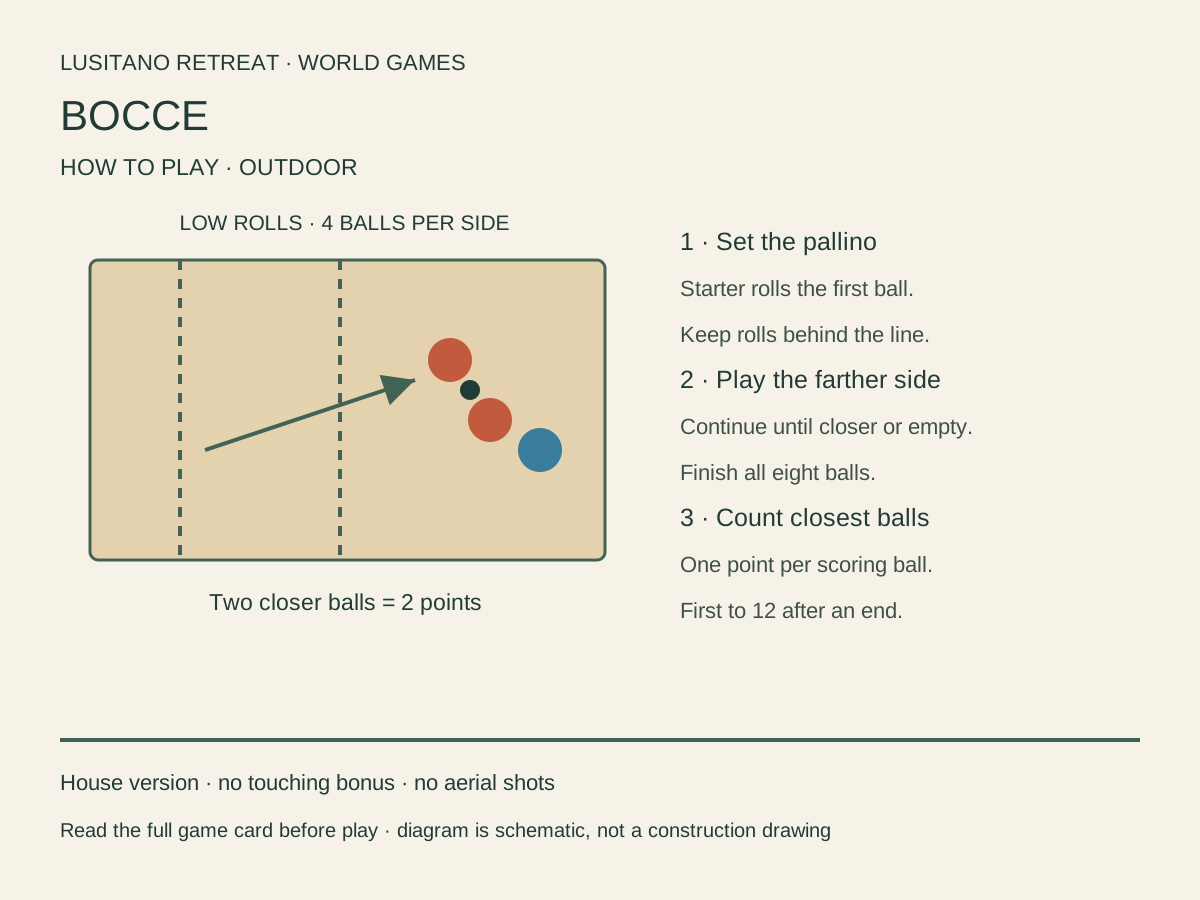
Agree a level lane, boundaries and throwing line; mark a pallino zone beyond halfway.
For this retreat variant, toss a coin to select the first pallino throw. If invalid, opponent tries; after two failures place it centrally in the agreed zone.
How to play
The pallino starter rolls the first bocce ball underarm.
The side not holding the closest ball keeps rolling until it is closest or runs out; then the other side plays its remaining balls.
Balls may move other balls and the pallino. Keep playing from their new legal positions.
Collect only when all eight balls have been delivered and the end has been measured. The scoring side starts the next end.
Scoring and special situations
One point for each ball closer than the opponent’s nearest; no special touching bonus in this variant.
Equidistant closest balls after all throws: zero-point end.
A ball outside the lane is removed; a pallino knocked outside makes the end void and it is replayed by the same starter. Foot-over-line roll is removed; restore displaced balls.
How to win. First side to reach at least 12 after a completed end.
At the retreat
Use low rolls on a smooth lane; no aerial shooting in guest introduction.
Purpose-made balls and a reclaimed scoreboard could pair with the workshop programme.
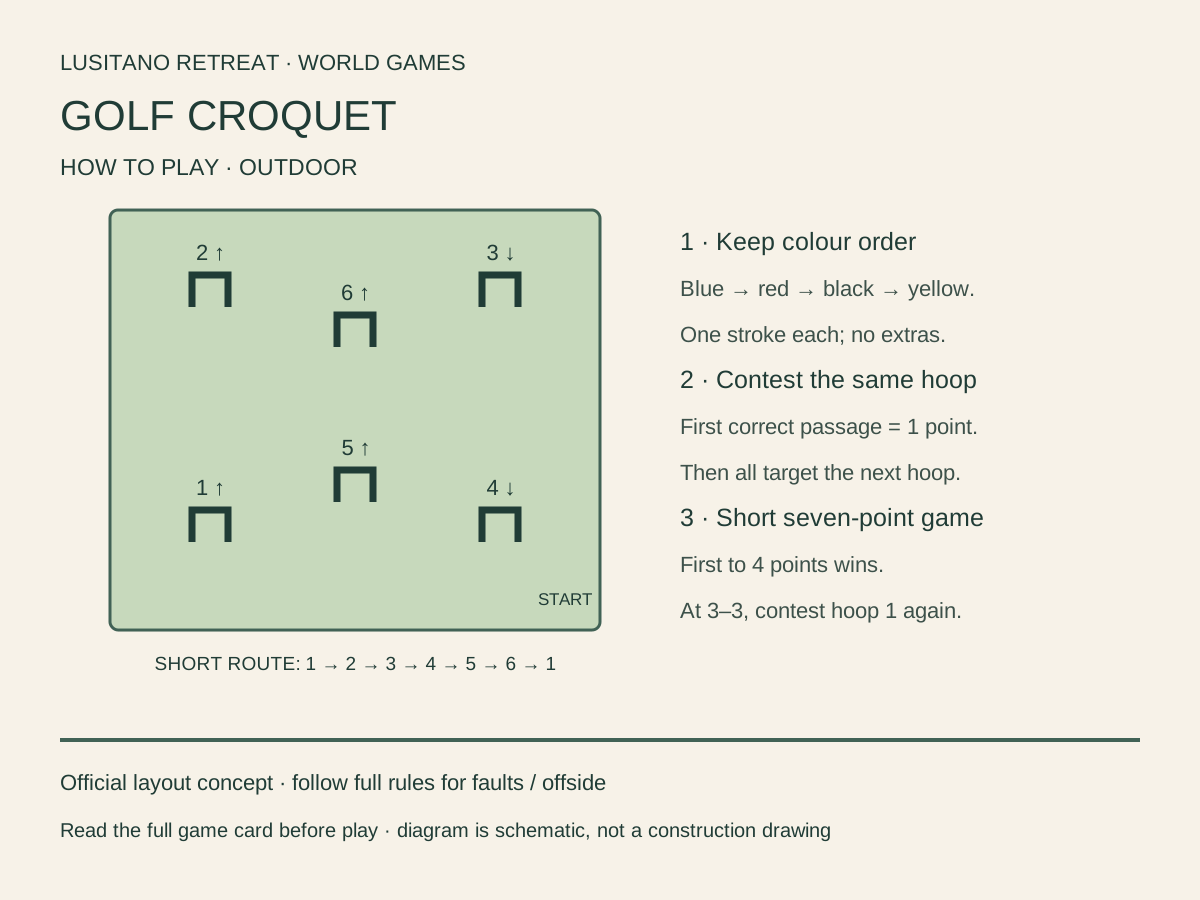
The version we teach. Official seven-point Golf Croquet format; full rules govern offside exceptions, wrong balls and unusual incidents.
Equipment
Four coloured balls, mallets and six hoops
Boundary markers; numbered hoop directions
Set it up
Use the official six-hoop layout and directions; in this short game contest hoops 1–6, then hoop 1 if tied 3–3.
Blue/black play red/yellow. Toss for first side; first four balls enter from within one yard of corner 4.
How to play
Always play blue, red, black, yellow, repeating; one stroke per turn and no bonus strokes.
All balls contest the same hoop. First ball fully running it correctly scores for its owner; everyone then contests the next.
Boundary balls return to the exit point. Do not advance beyond halfway towards the next hoop: offside can send a ball to a penalty area, subject to the listed exceptions.
Stop immediately on a wrong-ball stroke and use the federation remedy. For a striking fault, turn ends; opponent chooses replace or leave, and striker cannot score.
Scoring and special situations
Each correctly contested hoop is worth one point, including an opponent’s ball knocked through.
No peg-out point and no extra stroke for hitting another ball.
How to win. Short best-of-seven: first side to four hoop points.
At the retreat
Use a host with the full rule sheet for the first session.
No jump shots for the introductory retreat session; inspect hoops and maintain a clear swing area.
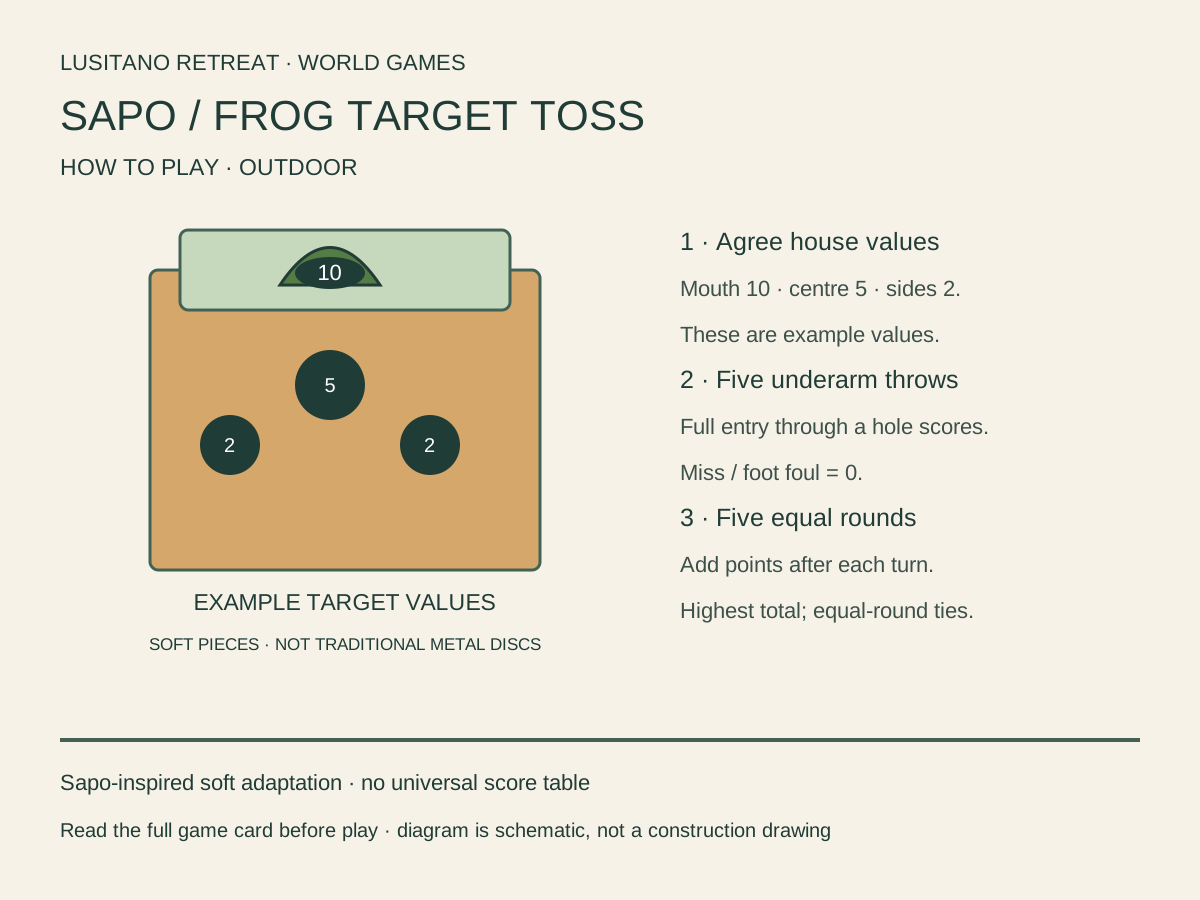
The version we teach. Soft-piece retreat house adaptation. Traditional table values, distances and metal discs vary; these values are an original example, not Peruvian official rules.
Equipment
Stable enclosed target table with a frog-mouth target and numbered openings
Five soft practice discs or beanbags; score sheet
Set it up
This retreat adaptation uses an agreed reachable throwing line and five rounds.
Label frog mouth 10, central opening 5, two side openings 2 each; agree these example values before play. They are not universal sapo scores.
How to play
Draw player order. Each player tosses five soft pieces underarm, one at a time, from behind the line.
Count only a piece passing fully through a labelled target opening; a resting piece or miss scores zero.
Wait until all five have settled, total the points, then retrieve on the host’s signal.
Repeat the same order for five rounds so everyone receives equal attempts.
Scoring and special situations
Add the printed target values for successful entries: mouth 10, centre 5, side 2.
A foot-over-line attempt scores zero. No rebounds from the ground count in this house version.
Highest five-round total wins; tied leaders play equal five-piece rounds until separated.
How to win. Highest total after five equal rounds; equal-round play-off for a tie.
At the retreat
No traditional metal discs in a mixed guest area. A soft adaptation needs targets sized to its pieces.
A reclaimed decorative cabinet is an idea for later assessment; do not assume an old cabinet withstands impact or is a safe target.
The version we teach. Begin with one board; complex combination fouls and formal match administration follow the linked laws.
Equipment
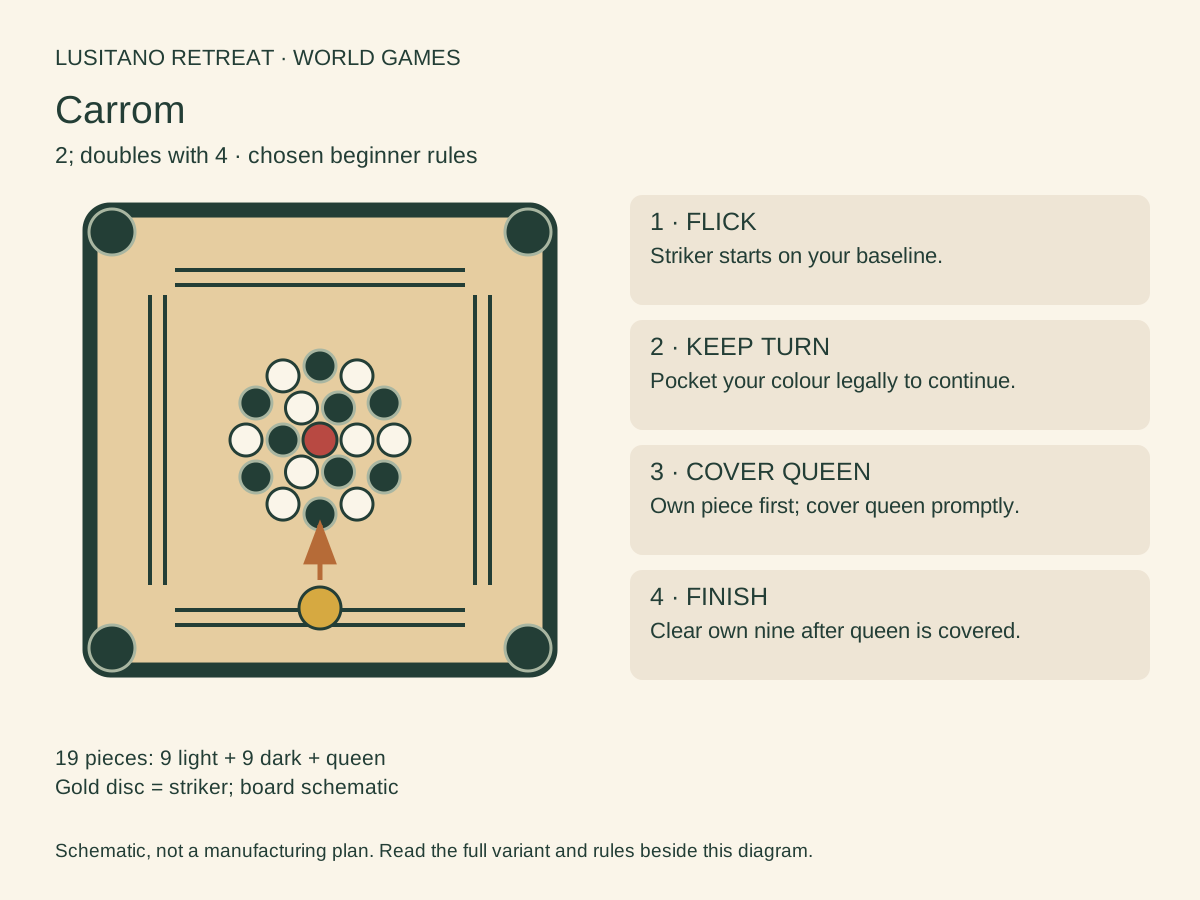
Four-pocket carrom board
9 light and 9 dark carrommen, 1 red queen and 1 striker
Set it up
Place the queen centrally and arrange the other 18 pieces in the usual alternating compact formation. Singles sit opposite; doubles partners sit opposite. The breaker plays white.
How to play
Flick the striker with a finger from your baseline. It must touch both baseline lines, or completely cover a base circle. Do not push it.
A legal pocket of your own colour continues your turn; otherwise play passes. Opponent pieces stay pocketed.
Pocket one own piece before attempting the queen. Cover the queen with your own piece on the same or next stroke; otherwise replace her centrally. With all nine own pieces present, queen plus one own piece still requires a cover.
Striker-only pocket: return one captured own piece as a due and lose the turn. If none is available, the due remains outstanding. Consult the federation rules for combination fouls. Never clear your last own piece while the queen remains uncovered.
Scoring and special situations
Board winner scores the opponent pieces remaining, plus 3 for a queen they covered; queen bonus stops at a score of 22.
How to win. Clear your own nine after the queen is covered. Federation games run to 25 points or eight boards.
At the retreat
Use a stable dry indoor table; count all pieces back into a labelled box.
The version we teach. Abapa with void grand-slam capture; other mancala games and regional Oware rules differ.
Equipment
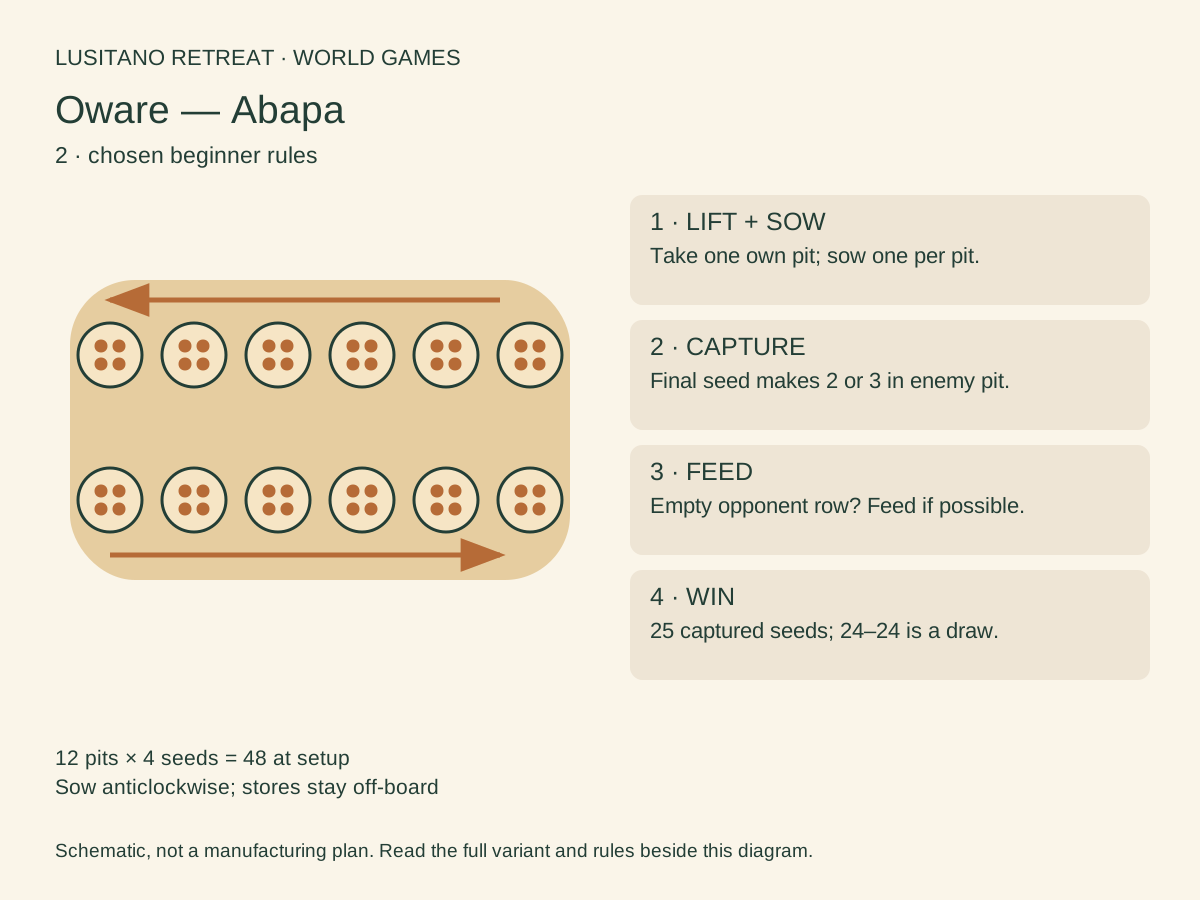
12 pits in two rows of six
48 seeds or counters; two separate capture bowls
Set it up
Put four seeds in each pit. Each player controls the six nearest pits; captured seeds are kept off the sowing circuit. Agree the first player.
How to play
Lift every seed from one non-empty pit in your row. Sow one per pit anticlockwise, starting with the next pit. Skip the emptied starting pit on every complete circuit.
Only the final seed can initiate capture: if it leaves an opponent pit with exactly 2 or 3 seeds, take them. Work backwards through consecutive opponent pits containing 2 or 3, stopping at any other count or your own row.
If this capture would empty the entire opponent row, take none: leave the sown seeds in place.
When the opponent row is empty, choose a move that feeds it if possible. If no feeding move exists, end play and collect the seeds remaining on your side.
Scoring and special situations
Each captured seed is one point. In an agreed endless cycle, each player collects seeds on their own side.
How to win. 25 seeds wins; 24–24 draws.
At the retreat
Make a portable board with twelve shallow dishes; counters must be too large for young children to swallow.
The version we teach. Chosen BGA quick-reference teaching rules, including 7-point compensation; not the 7½ tournament default. No handicap in the first teaching game.
Equipment
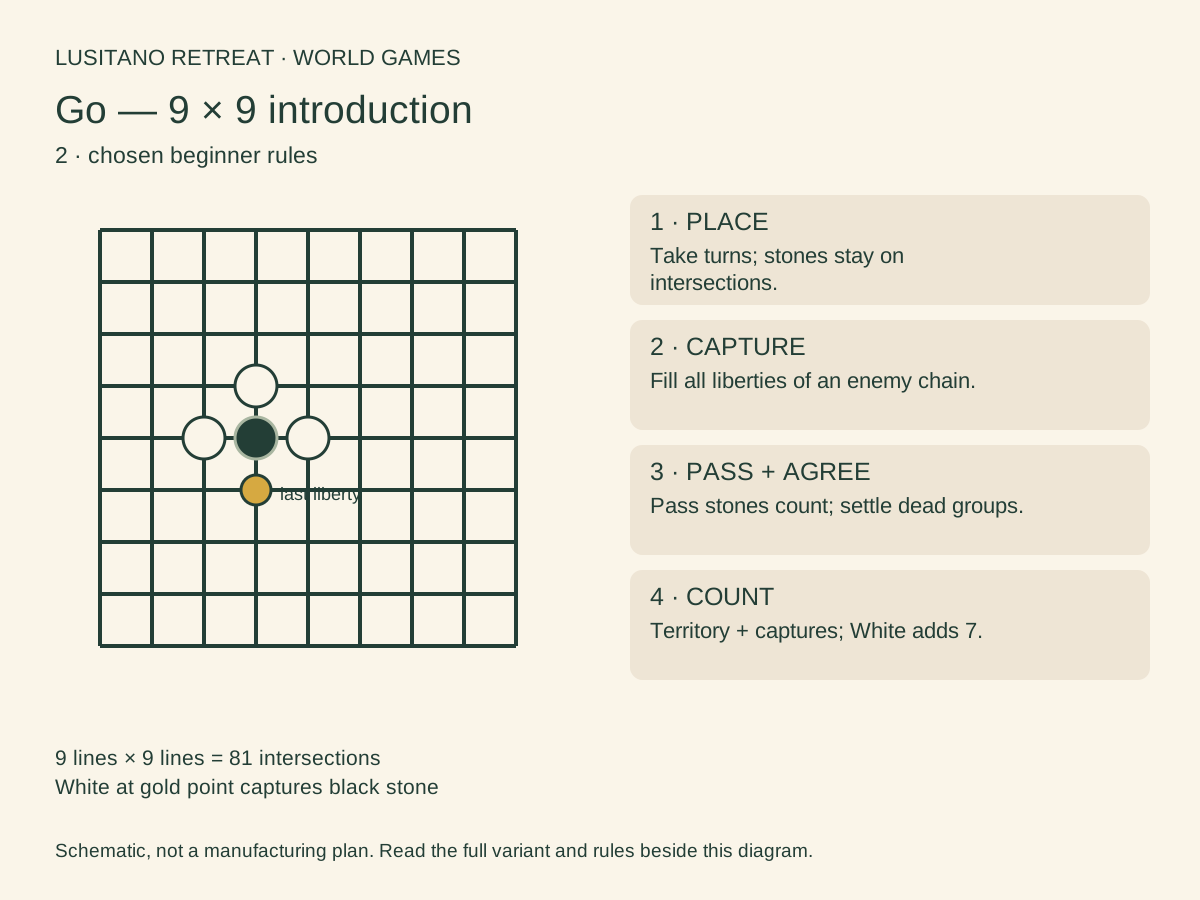
9 × 9 intersection board
Black and white stones; bowls for captures
Set it up
Start empty. Black moves first. Place stones on intersections, including edges and corners, never inside squares.
How to play
Alternate placing one stone or passing. Placed stones do not move. Orthogonally touching same-colour stones form a chain; diagonal contact does not join chains.
An empty neighbouring intersection is a liberty. Remove enemy chains when their last liberty is filled. A move leaving your own chain without liberties is forbidden unless removing enemy stones creates liberties.
Do not recreate an earlier position after one of your previous turns; this forbids immediate ko recapture.
On passing give the opponent a stone for their captures. Two consecutive passes end play; White passes last, adding a third pass if necessary. Agree and remove dead stones as captures; if disputed, resume play.
Scoring and special situations
Use the BGA quick-reference territory method: enclosed empty intersections plus captured stones and pass stones. White receives 7 extra points. Neutral intersections score neither side.
How to win. The higher final score wins; equal totals draw.
At the retreat
Offer a quiet table and demonstrate one capture before starting.
The version we teach. Museum teaching version with explicit no-double-bonus convention; no back-do, Seoul or Busan special sticks. Agree route and exit convention before play.
Equipment
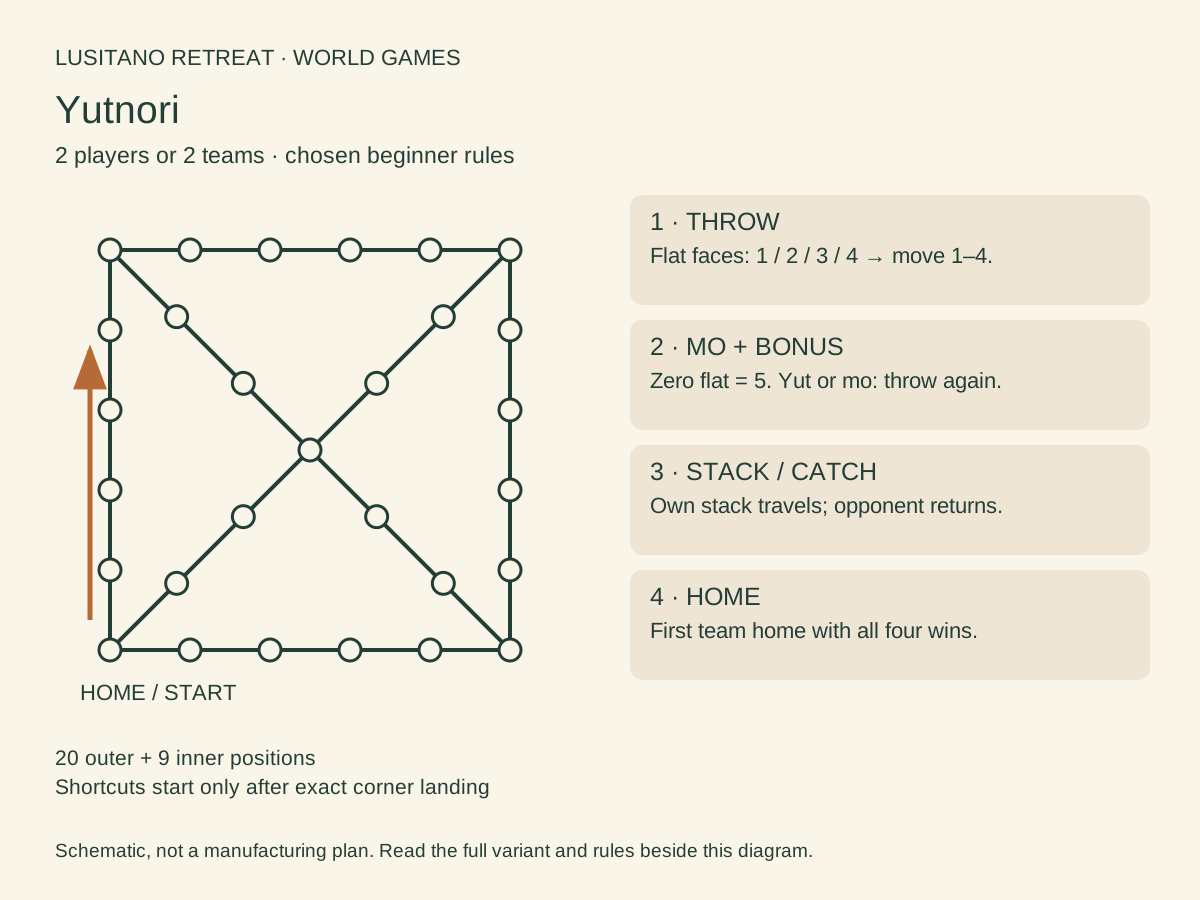
Board with outer circuit and diagonal shortcuts
Four flat/rounded sticks; four counters per team
Set it up
Keep all counters off-board at home. Agree the starter and label the direction of the outer route; the first move enters at the first point after home.
How to play
Throw four sticks on a clear mat. Count flat faces up: 1 = do (move 1), 2 = gae (2), 3 = geol (3), 4 = yut (4); zero flat = mo (5).
Use each result to move one counter or existing stack. Yut or mo earns another throw; keep the results and choose their order. A result cannot be split between counters.
Landing exactly on your own counters joins a stack moving together; landing on an opponent sends their counter or whole stack back off-board and earns a throw. In this chosen variant a yut/mo capture earns only one bonus throw, not two.
Enter a diagonal only after landing exactly at its starting corner. Continue along the selected route; at the centre take the route toward home. All four counters must complete the circuit.
Scoring and special situations
This is a race; no accumulated points. A sufficient result takes a counter past home and off the board.
How to win. First team to bring all four counters home wins.
At the retreat
Host demonstrates the two shortcut routes with a finger before the first throw.
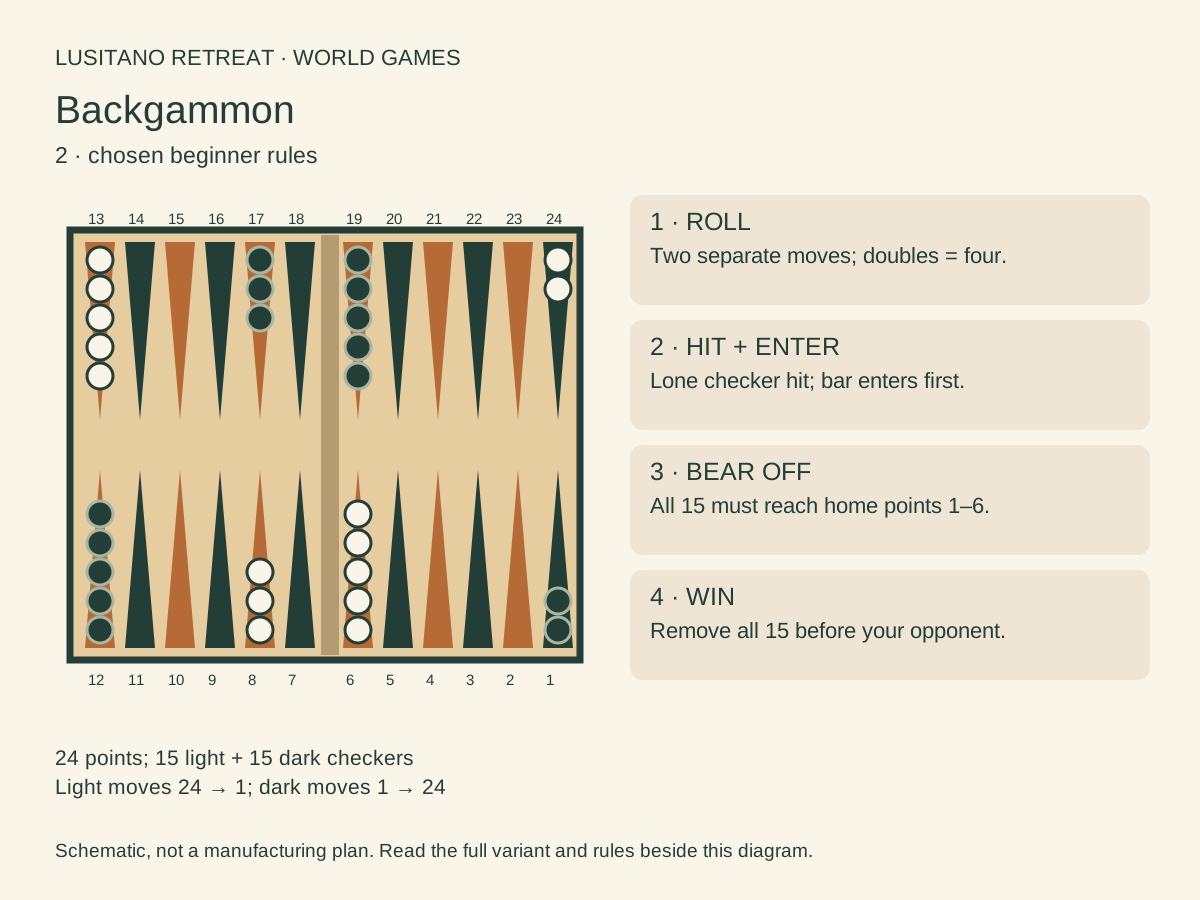
The version we teach. Beginner single games without doubling cube or gambling; formal match rules are optional later.
Equipment
24-point board and bar
15 checkers each; two dice and cups
Set it up
From your own numbering, place 2 checkers on point 24, 5 on 13, 3 on 8 and 5 on 6. Opponent mirrors you and travels the other way. Each rolls one die; higher starts using both opening numbers; ties reroll.
How to play
Roll two dice and move toward your point 1. Treat each die as a separate move; one checker may use both if the intermediate landing is legal. Doubles give four moves of that value.
Land on an empty point, your own checkers, or one opposing checker. A lone opponent is hit onto the bar; two or more opponents block the point.
Enter all your bar checkers first through the opponent home board using dice; blocked entries cannot be played. Use both dice if possible; if only one can be used, use the higher when either is playable.
Once all 15 are in your home points 1–6, bear off using exact dice. A higher die can remove from your highest occupied point only when no checker lies higher. If hit, re-enter and bring it home before bearing off again.
Scoring and special situations
First teaching games use one point per win. Formal scoring adds gammons/backgammons, cube and match rules.
How to win. Bear off all 15 first.
At the retreat
Use contrasting large checkers and a rolling tray to reduce dropped dice.
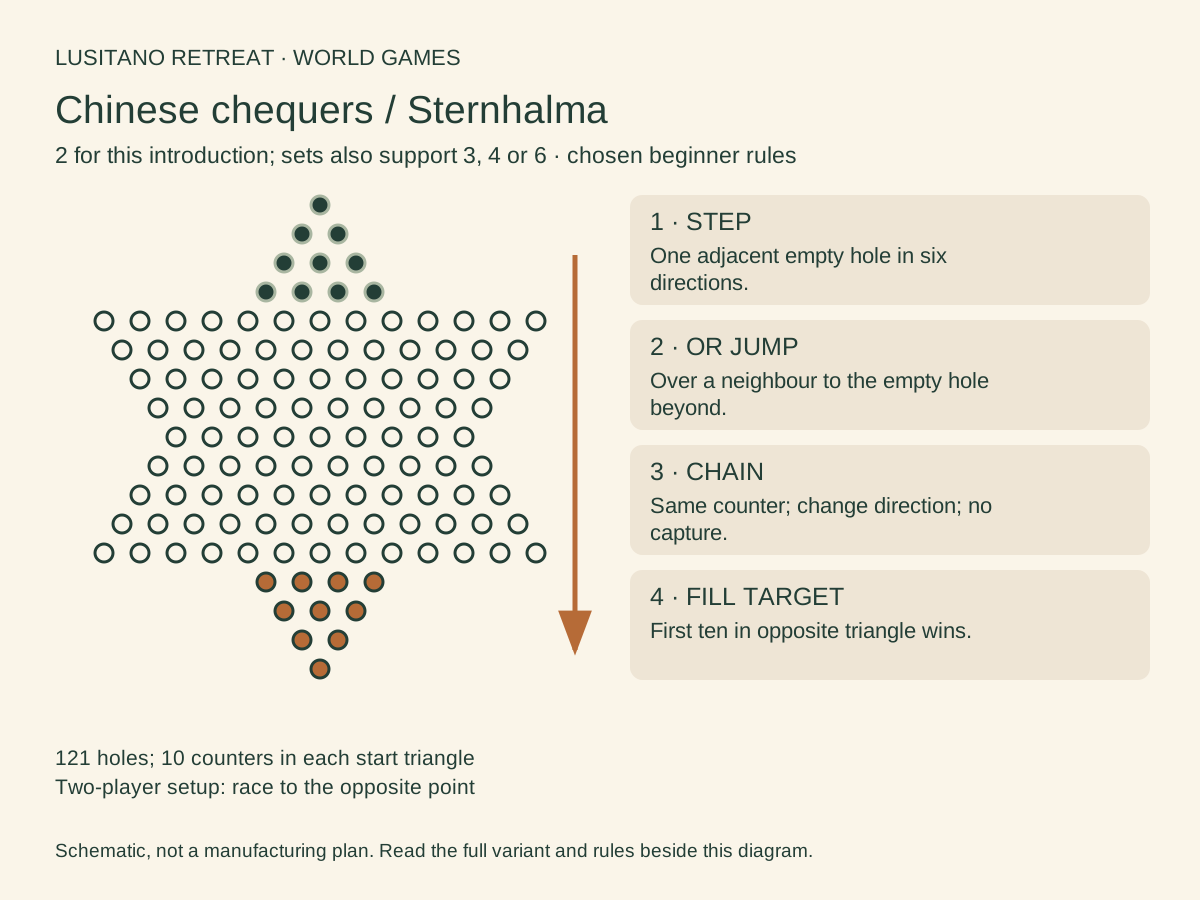
The version we teach. Two-player, ten-counter short-jump game. Other player counts, anti-blocking and target-camp restrictions require agreement.
Equipment
121-hole six-point star board
10 marbles or counters per player
Set it up
For two players, fill two opposite ten-hole triangular points with different colours. The opposite starting triangle is your destination. Choose a starter and alternate.
How to play
Move exactly one counter each turn. Either step to an empty adjacent hole along any of the six board directions, or jump over one immediately adjacent counter into the empty hole immediately beyond.
Jump over either colour. You may continue a chain with the same counter and change direction between jumps; stop when you choose. Do not combine a step and jump in one turn.
Jumped counters stay on the board: there are no captures and jumping is optional. Use ordinary short jumps, not the separate long-jump variant.
Aim to bring all ten into the opposite triangle. For friendly play do not deliberately leave a counter at home solely to prevent the opponent finishing; pause and resolve such blocking with the host.
Scoring and special situations
No point total: count how many of your ten counters have reached the target.
How to win. First to occupy all ten destination holes wins.
At the retreat
A reclaimed tabletop can hold a painted portable board; avoid loose small marbles around young children.
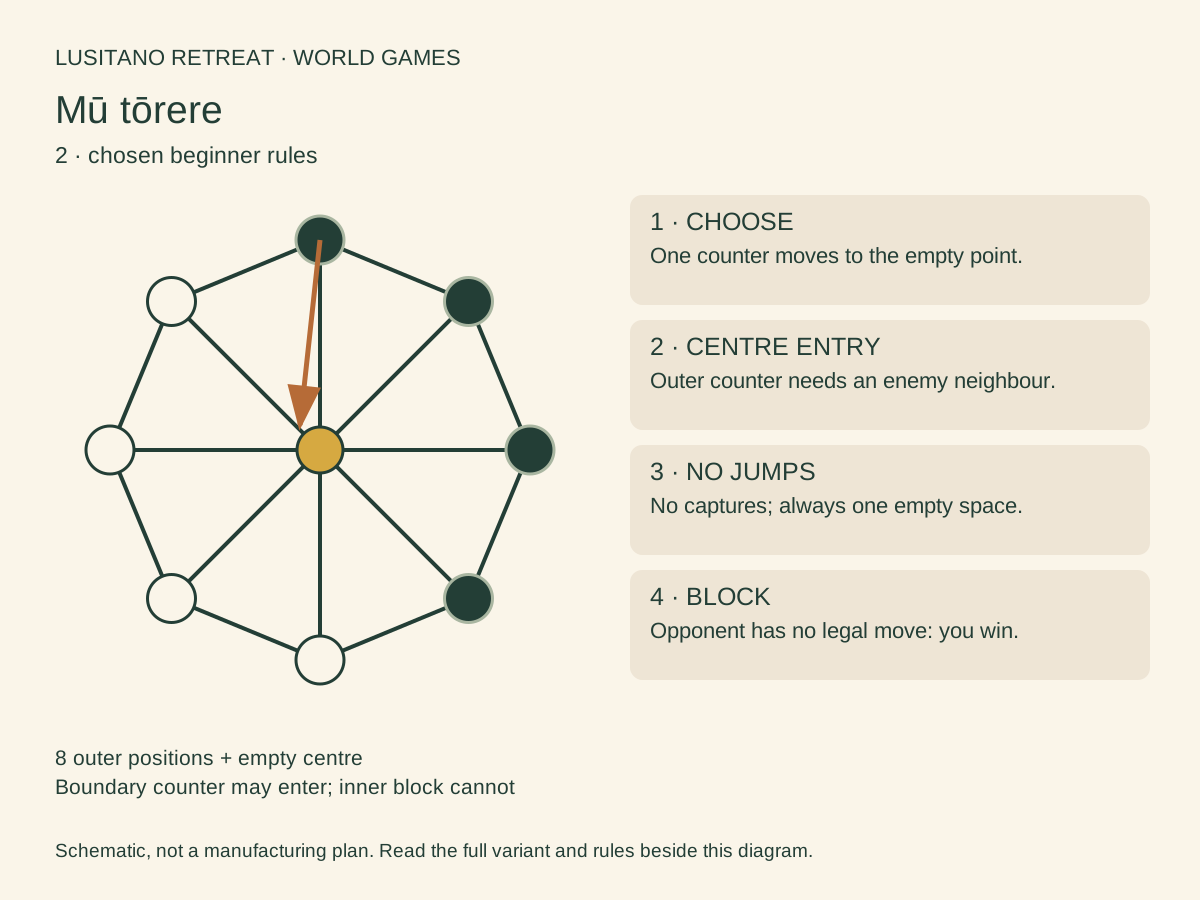
The version we teach. AMSP teaching rules retain the outer-to-centre enemy-neighbour restriction. Te Papa publishes alternative opening options; do not silently mix them.
Equipment
Eight connected outer positions and one centre
Four counters of each colour
Set it up
Place each colour on four consecutive outer points; leave the centre (pūtahi) empty. Alternate turns, choosing the starter. Only the two boundary counters of the starting four-counter block can enter the centre.
How to play
Move one counter into the single empty position. An outer counter may move to an adjacent outer empty point; a centre counter may move to the empty outer point.
To move from an outer point into the centre, the moving counter must have at least one opposing counter on an adjacent outer point. This restriction applies throughout this chosen version.
No jumping, captures, stacking or passing. All eight counters remain in play, so exactly one of the nine spaces is always empty.
Look ahead before filling the centre: a legal move can leave your opponent with no legal reply. Swap colours and first player for the next game.
Scoring and special situations
No capture score; keep a simple tally of games won only if desired.
How to win. Block the opponent so they have no legal move on their turn.
At the retreat
Draw the board on card and use two colours of large wooden discs; credit its Māori origin.
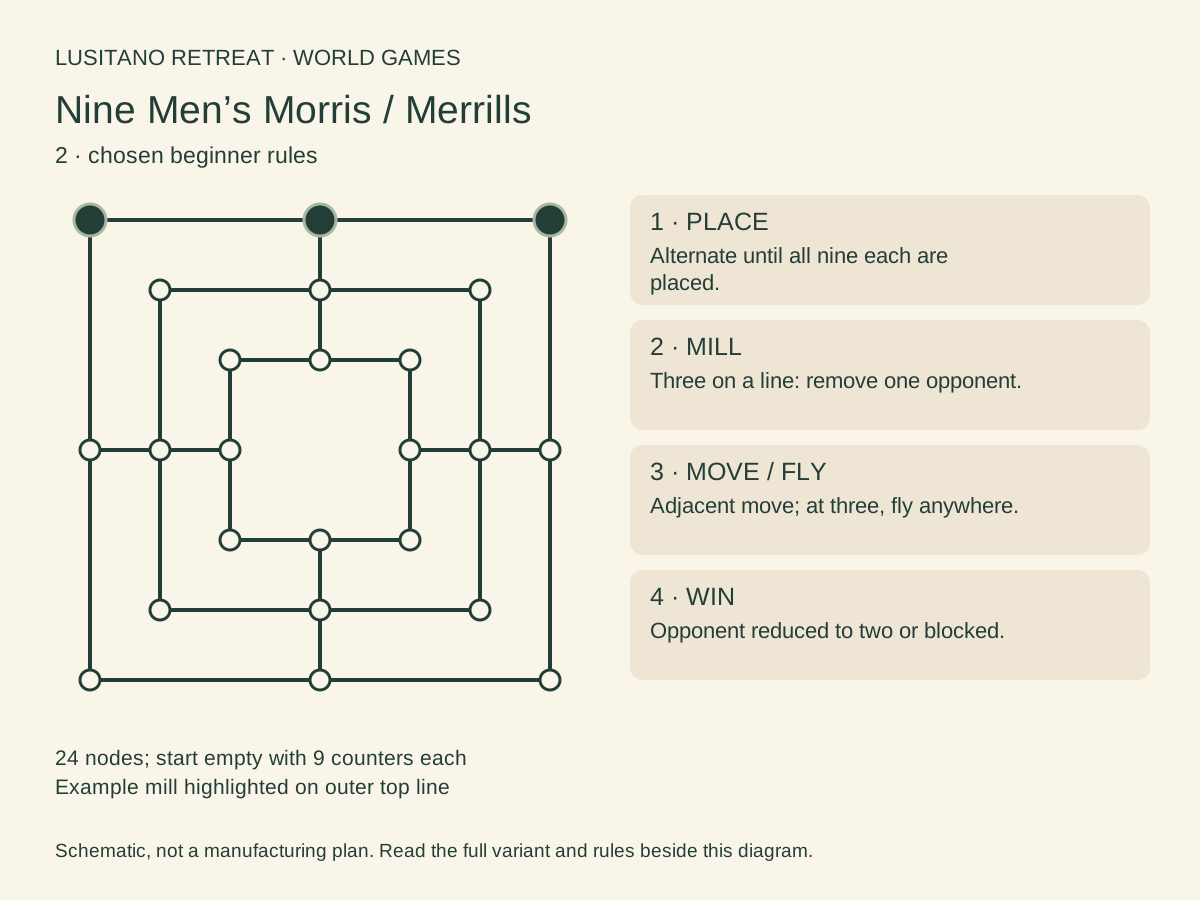
The version we teach. Three-phase museum version with flying at three; no-flying versions exist. No diagonal connections.
Equipment
Three-square board with 24 nodes
Nine counters per player
Set it up
Start with an empty board and nine counters each off-board. Choose the first player. Nodes are corners and side midpoints, not arbitrary positions on a line.
How to play
Placement phase: alternate adding one counter to an empty node until both have placed all nine. A new line of three on a drawn straight board line is a mill.
Each completed mill removes one opposing counter permanently. Choose a counter outside an opponent mill if any exists; otherwise a counter in a mill may be taken. A move making two mills removes just one in this chosen version.
Movement phase: move one counter along a drawn line to the next empty adjacent node, without jumping. Opening and later reforming a mill earns another capture.
When reduced to exactly three counters after placement, that player may fly one to any empty node. The other player still follows normal movement unless also down to three.
Scoring and special situations
No numeric point score. Agree a draw if the position repeats without progress rather than playing indefinitely.
How to win. Win when the opponent has only two counters left, or has no legal move.
At the retreat
Paint a board on sound reclaimed wood; add an inventory pouch with eighteen large counters.
A useful first stage is a few complete portable sets and one host who knows the rules. Try actual sessions before investing in permanent courts or a large collection. Keep guest feedback, missing-piece records and any changes to the taught variant.
 LUSITANO RETREAT